February 2026

We create avenues for the industry to gain more insights into emerging trends, industry-specific problems of national importance, and global best practices in logistics & supply chain management. We enable the industry to cut down transaction costs, increase efficiency, and enhance profitability. We are committed to sensitizing the industry about macro-level issues and helping find solutions to them.
India
Middle East Tensions Raise Logistics Cost Risks | TVS Supply Chain Targets Defence Logistics Opportunity | India Food Firms Improve Protein Supply Governance | Andhra Pradesh Digitises Public Medicine Supply Chain | TCI and Flying Whales Sign Mou To Strengthen Integrated Logistics Solutions International
US Rebuilds Domestic Semiconductor Supply Chain | Governments Rush to Secure Critical Minerals | AI Alone Not Enough for Planning: BCG | Global Cold Storage Leaders Ranked | AI Could Cut Supply Chain Costs By 20% | Hormel Appoints Mr. Bonifant Chief Supply Chain Officer | Jaguar Land Rover Reshuffles China Leadership
|
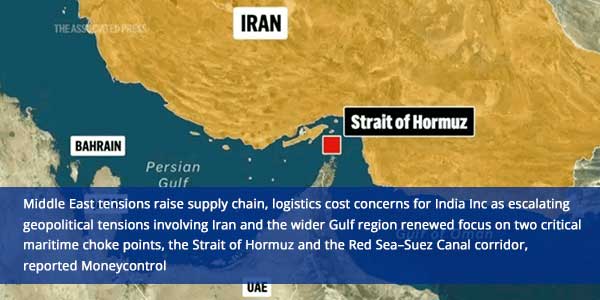
| Middle East tensions raise supply chain, logistics cost concerns for India Inc as escalating geopolitical tensions involving Iran and the wider Gulf region renewed focus on two critical maritime choke points, the Strait of Hormuz and the Red Sea–Suez Canal corridor, reported Moneycontrol. Concerns about a full closure of the Strait of Hormuz largely centre on oil prices and energy security, but recent disruptions have demonstrated that even limited threats or security incidents along major sea routes can quickly lead to higher freight rates, longer shipping timelines and increased working capital pressure for exporters and importers.“Foreign trade may be affected by increased freight and insurance costs, though India’s diversified trade relationships could help mitigate some of the impact,” said Mr. Manoranjan Sharma, Chief Economist at Infomerics Ratings. He added that energy intensive sectors such as aviation, logistics, paints and chemicals are likely to face margin pressure due to rising input costs, while upstream oil producers could benefit from stronger crude prices. |
|
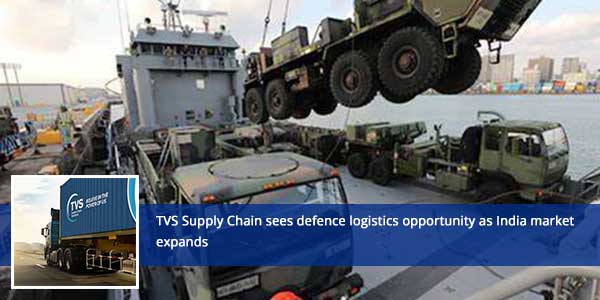
| TVS Supply Chain sees defence logistics opportunity as India market expands. Mr. Ravi Viswanathan, Managing Director of TVS Supply Chain Solutions, said the company expects the potential defence logistics opportunity in India to exceed Rs. 2,000 crore over time as the country’s defence ecosystem grows.Mr. Viswanathan said the opportunity is linked to the size of India’s broader defence sector, where supply chain services represent a notable portion of overall spending. “It's about a $28 billion industry, and typically, supply chain is anywhere between 8% and 12% of the overall size of that market,” he said.Headquartered in Chennai, TVS Supply Chain Solutions is establishing an early presence in the segment, drawing on more than a decade of experience managing defence supply chain operations across the UK and Europe. The company currently generates around $140 million in annual global revenue from defence related supply chain activities and plans to leverage this expertise to strengthen its India operations. |
|
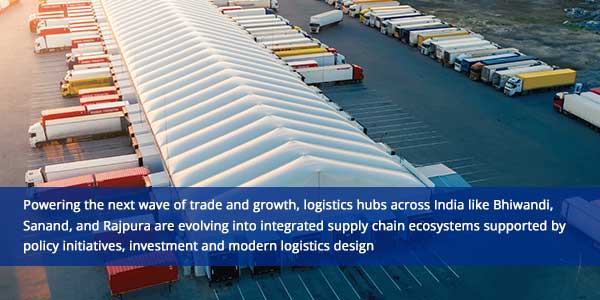
| Powering the next wave of trade and growth, logistics hubs across India like Bhiwandi, Sanand, and Rajpura are evolving into integrated supply chain ecosystems supported by policy initiatives, investment and modern logistics design. India’s logistics landscape has been undergoing a structural shift as scattered warehouses on city outskirts give way to large, integrated hubs that combine storage, processing, distribution and value-added services, reported India Transport and Logistics News. These emerging facilities, often described as logistics cities, are being developed as multi-functional platforms to support trade, manufacturing and consumption at scale.According to OneUnion Solutions, the country’s logistics and warehousing sector has moved steadily away from fragmented and largely unorganised facilities towards large format, planned parks backed by institutional investment and formal demand. The transition reflects broader changes in production, freight movement and consumption patterns, alongside a growing emphasis on supply chain efficiency. Mr. Anshul Singhal, Managing Director of Welspun One, was quoted by the portal, saying that the sector is witnessing a “clear shift from land-led warehousing to integrated logistics ecosystems,” driven by investors seeking scale, regulatory compliance and long-term asset quality. |
|
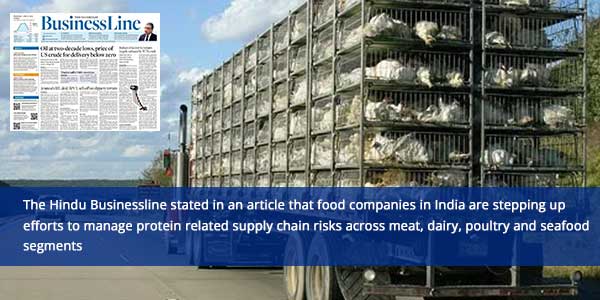
| The Hindu Businessline stated in an article that food companies in India are stepping up efforts to manage protein related supply chain risks across meat, dairy, poultry and seafood segments. This broadly aligns with Asia’s average performance even as gaps remain in areas such as climate and animal welfare, according to the report ‘Asian Protein Buyers (APB) 100,’ released by Asia Research and Engagement (ARE), cited by the article. The article further stated that the APB100 serves as an investor backed benchmark evaluating how 100 of Asia’s largest listed protein buying companies manage environmental, social and governance factors embedded in meat, dairy, poultry and seafood supply chains. The assessment covers companies headquartered or operating across Mainland China, Hong Kong and Taiwan, Japan, South Korea, India, Thailand, the Philippines, Malaysia, Indonesia, Vietnam and Singapore.The report said India has emerged as one of the faster moving markets in the benchmark, with the average score of Indian companies rising from about 7 per cent in 2023 to 16 per cent in 2025. The study assessed 13 listed Indian food companies spanning food manufacturing and restaurant chains, of which 11 recorded year-on-year improvement.The findings noted that Indian companies performed strongest in traceability, sourcing practices and labour standards, reflecting wider adoption of supplier codes, sourcing policies and due diligence frameworks. |
|
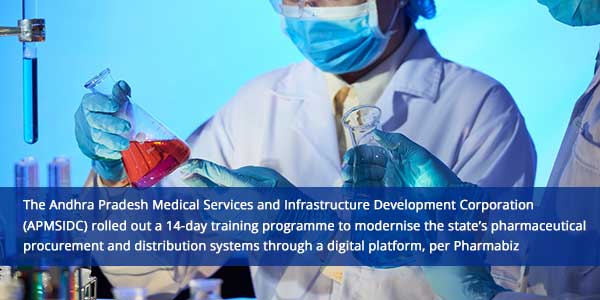
| The Andhra Pradesh Medical Services and Infrastructure Development Corporation (APMSIDC) rolled out a 14-day training programme to modernise the state’s pharmaceutical procurement and distribution systems through a digital platform, per Pharmabiz.The initiative aims to transition the state’s medicine supply chain to a fully integrated digital ecosystem centred on the e-Aushadhi portal, replacing manual processes and improving the availability of essential medicines across the public health network.Officials said the training focuses on strengthening the indent to issue procurement cycle, with pharmacy officers and administrative staff being trained in modules covering digital indenting for medicines and surgical supplies, scientific inventory management and the implementation of revised procurement procedures. The programme is intended to enable real time monitoring of stock levels, helping prevent shortages as well as the expiry of medicines in government warehouses. APMSIDC has adopted a hybrid training format combining virtual sessions with hands on workshops at its Mangalagiri headquarters, allowing officials from multiple districts to participate without disrupting healthcare services.The initiative forms part of a broader national push to digitise drug procurement and strengthen medical supply chains across India, stated the article. |
|
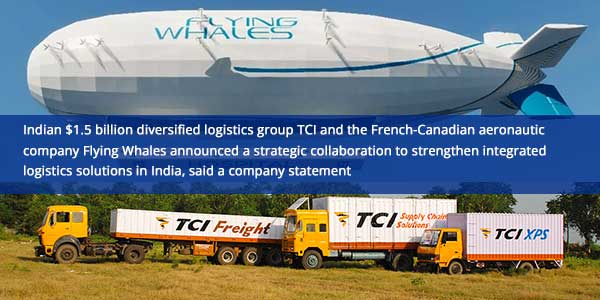
| Indian $1.5 billion diversified logistics group TCI and the French-Canadian aeronautic company Flying Whales announced a strategic collaboration to strengthen integrated logistics solutions in India, said a company statement. On the occasion of the official summit between the President of the French Republic, Emmanuel Macron, and Prime Minister Narendra Modi, TCI and Flying Whales signed the MoU in the presence of Mr. Vineet Agarwal, Managing Director, and Mr. Rajkiran Kanagala, Chief Business Officer, Transport Corporation of India and Mr. Sébastien Bougon, President of Flying Whales and President of Flying Whales operation subsidiary. Flying Whales is developing the LCA60T aeronautical program, a rigid cargo airship with a large payload capacity of 60 tons. The LCA60T has the unique ability to load and deliver its cargo in stationary flight. It will decarbonize transportation of goods, including heavy or bulky loads, and explore new and develop existing logistics, infrastructure and supply chain solutions in India, with a specific focus on enabling high-value and mission-critical programs, said the statement. |
INTERNATIONAL
|
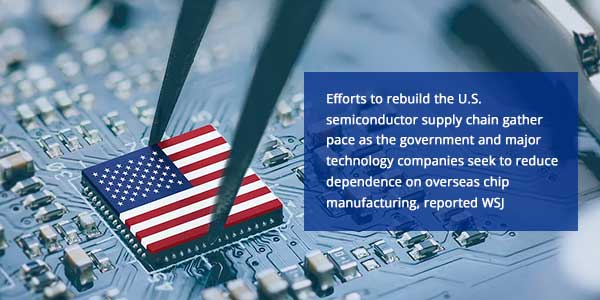
| Efforts to rebuild the U.S. semiconductor supply chain gather pace as the government and major technology companies seek to reduce dependence on overseas chip manufacturing, reported WSJ. Although the technology was invented in the United States and many chips are still designed there, most manufacturing today takes place in Asia, exposing global supply chains to geopolitical risks and disruptions such as those experienced during the Covid period. In response, U.S. policymakers have introduced incentives and pressure on industry to reshore parts of the semiconductor supply chain. Companies such as Apple, which designs advanced chips but relies on external manufacturers, are playing a role by supporting investments in domestic production. The supply chain begins with companies such as GlobalWafers America in Sherman, Texas, where purified silicon is converted into 12-inch wafers that later serve as the base for semiconductor fabrication. The wafers are produced by melting silicon at extremely high temperatures to form crystal ingots that are sliced, polished and prepared for manufacturing. The next stage takes place at chip foundries such as Taiwan Semiconductor Manufacturing Company’s facilities in Arizona, where wafers are processed using advanced lithography systems to imprint billions of transistors that form semiconductor chips. Read the full article for more such insights. |

|
| Governments are rushing to secure critical minerals as resource nationalism gathers pace. Countries across major economies are expanding stockpiles of metals considered vital for national security, industrial policy and emerging technologies, reported CNBC. A new global race to secure critical mineral supplies is taking shape as governments attempt to reduce dependence on concentrated supply chains and potential export controls. From the United States to Europe and Asia, policymakers are strengthening strategic reserves to safeguard materials used in electrification, defence production and advanced manufacturing.In the United States, officials recently outlined a strategic mineral reserve valued at about $12 billion, known as Project Vault, aimed at building stockpiles of rare earths and other key metals to strengthen supply chain resilience for American industry. The initiative complements other policy efforts such as the Forum on Resource Geostrategic Engagement (FORGE), which focuses on coordination around mineral policy and projects.Other regions are advancing similar measures. Australia announced plans to establish an $800 million strategic critical minerals reserve prioritising materials such as antimony, gallium and rare earth elements, while the European Union is considering a joint reserve of critical raw materials under its RESourceEU strategy. |
|
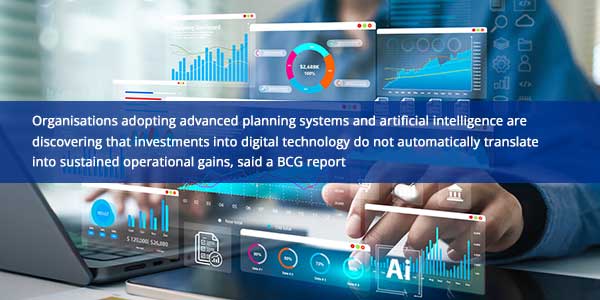
| Organisations adopting advanced planning systems and artificial intelligence are discovering that investments into digital technology do not automatically translate into sustained operational gains, said a BCG report. The Boston Consulting Group’s report on the state of supply chain planning found that performance differences among companies are largely driven by how effectively digital tools are embedded in decision making processes rather than by access to technology itself. While many organisations have implemented advanced planning systems and begun experimenting with artificial intelligence, only a limited number have achieved consistent improvements in service levels, forecast accuracy and inventory management.The report said planning maturity remains a key factor in business performance. Many companies have modern planning platforms in place but fail to fully utilise them because process redesign and operating model changes lag behind system deployment. As a result, the potential value of advanced planning systems often remains underexploited.Artificial intelligence is expected to enhance planning capabilities but fully autonomous planning remains a longer-term aspiration. Most current benefits are derived from applications that improve forecasting, automate workflows and support data interpretation. |
|
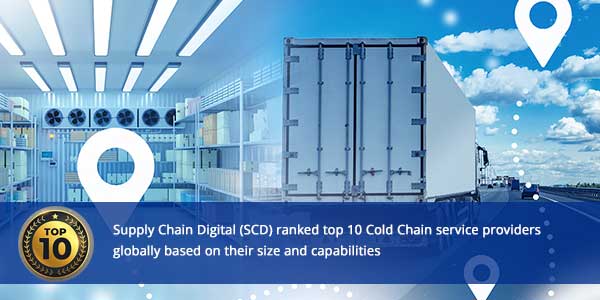
| Supply Chain Digital (SCD) ranked top 10 Cold Chain service providers globally based on their size and capabilities. Along with providing top-class storage facilities maintaining precise temperature conditions across chilled, frozen and deep freeze environments, cold chain service providers around the world help slow biological decay, preserve vaccine potency and reduce food waste while ensuring compliance with stringent regulatory standards from authorities such as the Food and Drug Administration and the European Medicines Agency. SCD’s Industry rankings highlight several companies that play a significant role in this specialised segment of the logistics industry. Culina Group has built a strong presence in the United Kingdom and Ireland through a shared user distribution model supporting major retailers. In Canada, Congebec has expanded its domestic cold chain network through acquisitions and rail linked logistics facilities.Other major operators include Interstate Warehousing in the United States, Mexico based Frialsa Frigorificos and Europe focused Constellation Cold Logistics. Asia’s Nichirei Logistics operates an extensive network of refrigerated facilities, while United States Cold Storage and NewCold are known for large scale automated warehouses. |
|
| AI driven supply chain initiatives could reduce operating costs by up to 20 per cent as companies apply targeted artificial intelligence solutions to planning, procurement, manufacturing and fulfilment processes, according to research by Accenture. Accenture’s report titled “Making Self-Funding Supply Chains Real” found that organisations are increasingly using focused AI interventions to address the largest cost drivers across supply chain operations, generating early savings that can be reinvested to build more resilient and autonomous systems over time.“Supply chain leaders are forced to pursue two goals at once: cut costs faster and build resilience for what’s next. But sweeping transformation is hard to fund. What we’re seeing is a shift toward focused, AI powered actions that generate savings early on, and companies using those savings to build more autonomous, resilient supply chains in the long run,” said Ms. Patricia Riedl, Supply Chain and Operations Lead, Americas at Accenture.The research indicates that such interventions can reduce operational expenditure by up to 24 per cent and cut manual interventions by as much as 50 per cent as autonomous systems expand. Overall supply chain costs could fall by up to 20 per cent depending on the level of automation adopted. |

|
| Global branded food company Hormel appointed Hershey veteran Mr. Will Bonifant as Group Vice President and Chief Supply Chain Officer, effective March 9, reported Supply Chain Dive. Mr. Bonifant will oversee Hormel Foods’ global supply chain operations, including procurement, manufacturing, planning, logistics and engineering, the company said in a Feb. 12 announcement. His appointment comes as the company seeks to strengthen operational capabilities and support its long-term strategic priorities.“Will is a proven supply chain leader who has scaled complex operations and built modern capabilities across global networks,” said Mr. John Ghingo, President of Hormel Foods. Mr. Bonifant joins the role after more than 15 years at Hershey, where he most recently served as Vice President of Manufacturing, Engineering and Supply Chain Strategy. In that position, he oversaw about 20 manufacturing plants supporting the company’s North America confection and salty snacks businesses. |
|
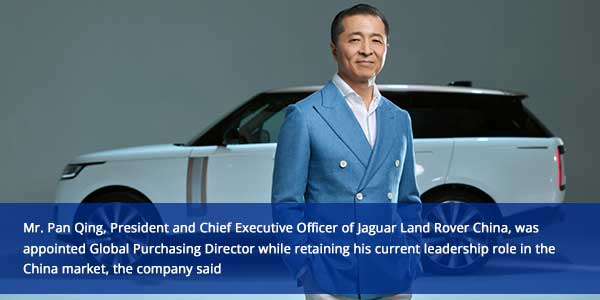
| Mr. Pan Qing, President and Chief Executive Officer of Jaguar Land Rover China, was appointed Global Purchasing Director while retaining his current leadership role in the China market, the company said. The appointment took effect immediately and forms part of a broader leadership reorganisation at the automaker’s China operations. At the same time, Mr. Tim Howard, Chief Financial Officer of Jaguar Land Rover China, has been named Chief Executive Officer of JLR China. Mr. Wu Chen, Chief Commercial Officer, and his team will report directly to Mr. Howard. Mr. Pan has led the company’s China business since January 2017 and is among the longest serving heads of the automaker’s operations in the market. He is also the first Chinese executive to sit on Jaguar Land Rover’s global board. During his tenure, he oversaw initiatives including the “China Upgrade Strategy 2020” and the wider “Reimagine” transformation programme, which strengthened China’s role within the company’s global research, development and manufacturing network. The leadership changes come as Jaguar Land Rover expands partnerships in China. In 2024, the company reached an agreement with Chery to revive the Freelander brand, with new models to be developed on Chery’s electric vehicle platform and manufactured in Changshu, targeting the rapidly growing intelligent new energy vehicle segment, said the news article. |
We will connect again next month, with a comprehensive dossier of news, trends and events from the industry.
| Courtesy: Newsletter content developed by Mr. Aanand Pandey | ||