July & August 2026

We create avenues for the industry to gain more insights into emerging trends, industry-specific problems of national importance, and global best practices in logistics & supply chain management. We enable the industry to cut down transaction costs, increase efficiency, and enhance profitability. We are committed to sensitizing the industry about macro-level issues and helping find solutions to them.
India
SHANTI Act Focuses on Nuclear Supply Chains | Hyderabad Declaration Backs Green Logistics | Kanpur-Kabrai Highway Boosts Logistics | India Plans Manufacturing Supply Chain Push | QCOs Strain Chemical Supply Chains Battery Scrap Strengthens Supply Chains PM GatiShakti Enables Integrated Infrastructure Planning | Indian Businesses Prioritise Supply Chain Resilience | India Logistics Hubs Outpace Asia Pacific Rents | Tamil Nadu CM Announces Semiconductor and Logistics Hubs | Tata, Javelin Venture Plan India Co-Production | Semicon 2.0 Broadens India’s Chip Supply Chain International
Apple Expands US Chip Manufacturing | Qatar, Saudi Deepen Logistics Ties | Multi-Carrier Networks Boost Parcel Resilience: Maersk | AI Drives Next-Generation Logistics | Volkswagen Cuts Models Amid China Challenge | UK Review Calls for Supply Chain Reforms AI Supply Chain Data Mistakes Raise Risks | AI Reshapes Supply Chain Operating Models | AI Delivers Value Across Logistics Operations | Cosco Expands Integrated Logistics Across Southeast Asia | Western Sydney Airport Drives Region’s Industrial Pipeline | UPS Retains Top Logistics Brand Ranking From the MOVE Members’ Desk
Sarjak Container Lines (SCL)

|
| NITI Aayog convened a stakeholder consultation to discuss implementation of the SHANTI (Sustainable Harnessing and Advancement of Nuclear Energy for Transforming India) Act, 2025, focusing on regulatory frameworks, financing mechanisms and supply chain preparedness for India’s nuclear energy sector, the Press Information Bureau reported. The meeting brought together policymakers, industry representatives and technical experts to deliberate on the operational framework for implementing the legislation.Chaired by Prof. Abhay Karandikar, Member, NITI Aayog, the consultation included senior representatives from the Ministry of Power, Central Electricity Authority, NTPC Ltd., Department of Atomic Energy and Atomic Energy Regulatory Board. Discussions were organised around three key pillars considered critical to the Act’s implementation. The first session examined legislative and regulatory provisions, including draft rules, compliance mechanisms and foreign direct investment policy aimed at attracting capital while safeguarding domestic interests. The second focused on financing, insurance frameworks and strategies to strengthen public awareness and acceptance of nuclear energy projects.The third session addressed manufacturing, operational readiness and workforce development, with particular emphasis on strengthening domestic manufacturing capabilities, enhancing supply chain resilience and designing capacity-building programmes. NITI Aayog said stakeholder inputs across these areas would help strengthen the implementation framework for the SHANTI Act, 2025. |
|
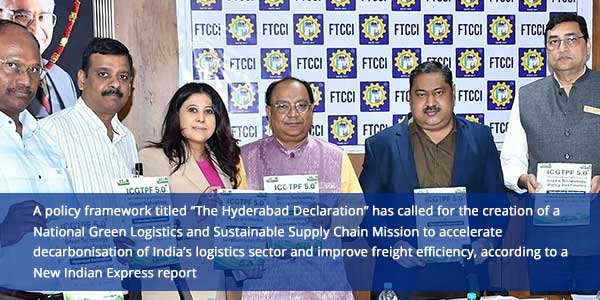
| A policy framework titled “The Hyderabad Declaration” has called for the creation of a National Green Logistics and Sustainable Supply Chain Mission to accelerate decarbonisation of India’s logistics sector and improve freight efficiency, according to a New Indian Express report. Unveiled at the International Conference on Green Technology, Policy and Finance in Hyderabad, the policy framework is expected to be submitted to NITI Aayog and other government bodies for consideration. The declaration proposes an integrated national strategy combining green hydrogen, digital logistics, renewable energy and sustainable port infrastructure. The framework projects that closing India's logistics-cost gap to 8–9% seen in advanced economies could unlock US$320–390 billion a year, driven by leaner operations, lower fuel spend and stronger export competitiveness.The framework's proposals include a dedicated National Green Logistics & Hydrogen Corridors Mission, a pilot hydrogen corridor along the Kandla–Delhi–Mumbai Industrial Corridor, converting major ports to zero-emission operations, a PPP-backed Green Logistics and Ports Fund, and AI-driven logistics platforms built for carbon tracking. The declaration also includes a draft Cabinet note, a Prime Minister’s Office decision brief and state-specific implementation roadmaps aimed at supporting adoption by both the Centre and state governments. |
|
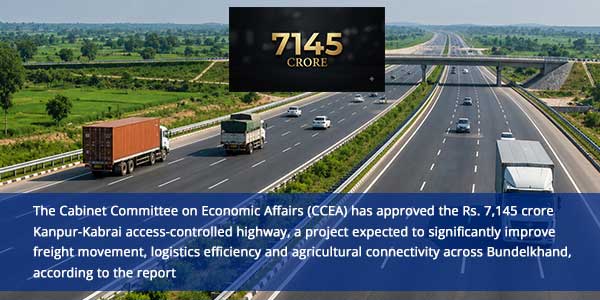
| The Cabinet Committee on Economic Affairs (CCEA) has approved the Rs. 7,145 crore Kanpur-Kabrai access-controlled highway, a project expected to significantly improve freight movement, logistics efficiency and agricultural connectivity across Bundelkhand, according to the report. The 117.7-km greenfield corridor is projected to reduce travel time between Kanpur and Kabrai from about 3.5 hours to nearly 1.5 hours, reported Financial Express. To be developed by the National Highways Authority of India under the Ministry of Road Transport and Highways, the highway forms part of the Bhopal-Kanpur Economic Corridor. It is designed to improve connectivity between Bundelkhand’s mining, industrial and agricultural regions and major consumption centres, supporting faster movement of goods and lowering logistics costs.The report further noted that the corridor will provide a high-speed route linking the Kabrai mining belt, a major source of construction materials in northern India, with industrial hubs including Kanpur and Bhopal. |
|
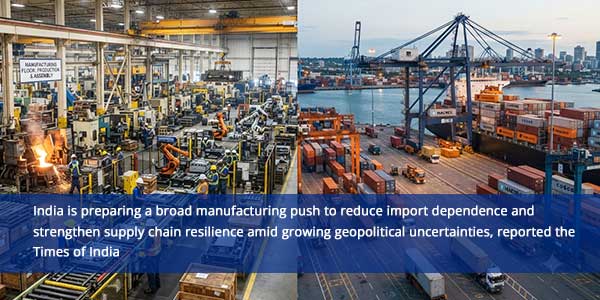
| India is preparing a broad manufacturing push to reduce import dependence and strengthen supply chain resilience amid growing geopolitical uncertainties, reported the Times of India. The push is meant to widen India's domestic production base, narrow the trade gap, protect its foreign exchange buffers and put the country forward as a manufacturing alternative to China. The report noted that the government is preparing a list of more than 100 products for increased domestic manufacturing. The proposed focus spans electronics, chemicals, essential pharmaceuticals, fertilisers, semiconductors, automobiles and machinery. Ministries have been asked to identify products where import substitution through local manufacturing is commercially viable, while recognising that imports of commodities such as gold, crude oil and critical minerals cannot be easily replaced. The initiative comes as renewed tensions in West Asia have exposed India's reliance on imports and disrupted global supply chains. With the Strait of Hormuz disruptions threatening to push up freight rates and delay shipments, consumer goods and electronics makers are said to be pulling forward their China orders, stockpiling more components than usual and locking in extra warehouse space as a buffer. The report added that the manufacturing drive forms part of India's broader goal of raising manufacturing's share of GDP to 25% by 2035 from about 17% currently. |
|
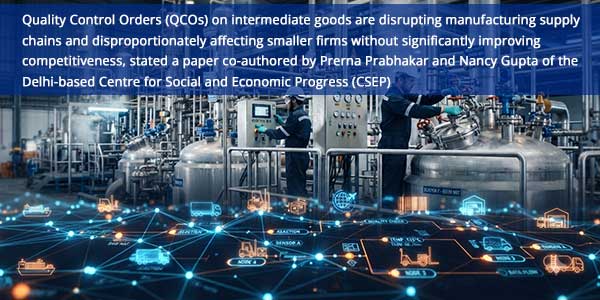
| Quality Control Orders (QCOs) on intermediate goods are disrupting manufacturing supply chains and disproportionately affecting smaller firms without significantly improving competitiveness, stated a paper co-authored by Prerna Prabhakar and Nancy Gupta of the Delhi-based Centre for Social and Economic Progress (CSEP). The study called for a more evidence-based approach to implementing quality regulations, following the government's decision to revoke several QCOs in late 2025. Using firm-level data from FY2015 to FY2024, the paper examined the impact of QCOs on chemical-using industries, where regulatory coverage expanded sharply after 2018. By 2024, 56.6% of chemical-using firms were affected by input-side QCOs, while 66.4% faced regulations on either inputs or outputs. The analysis found that firms were absorbing higher compliance costs while passing some of them on to customers. Smaller firms were hit hardest, with profitability declining by 47.6% under input-side QCOs and by 58.9% under output-side regulations, while larger firms experienced relatively limited impacts. |
|
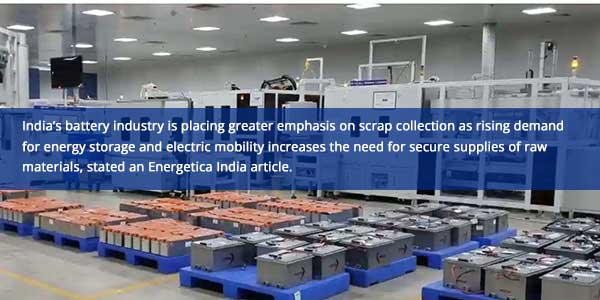
| India’s battery industry is placing greater emphasis on scrap collection as rising demand for energy storage and electric mobility increases the need for secure supplies of raw materials, stated an Energetica India article. The sector is increasingly viewing battery recycling as a strategic resource that can reduce import dependence, strengthen domestic supply chains and support India’s circular economy objectives. The report noted that end-of-life batteries are becoming an important secondary source of lead and other materials, although collection remains fragmented across households, automobile workshops, fleet operators and industrial users. Organised recyclers are expanding collection networks as stricter environmental regulations, traceability requirements and Extended Producer Responsibility norms encourage a shift away from informal recycling channels.The report said companies are increasingly investing in scrap sourcing alongside recycling capacity as battery demand grows. It added that stronger collection systems will be essential to improving resource security, supporting domestic manufacturing and building more resilient battery supply chains. |
| PM GatiShakti Enables Integrated Infrastructure Planning |

|
| The PM GatiShakti National Master Plan (PMGS NMP) has enabled integrated and coordinated infrastructure planning across Central Ministries, States and Union Territories, with 396 projects worth about ₹18.66 lakh crore evaluated through its Network Planning Group (NPG) mechanism, reported PIB. Of these, 256 projects have been sanctioned and 198 are currently under implementation. Launched in October 2021, the PMGS NMP provides a “Whole of Government” framework for coordinating infrastructure development across sectors. It uses geospatial data, satellite imagery and API integration to support data-driven planning and monitoring, with the objective of improving multimodal connectivity, strengthening last-mile links and reducing travel time for the movement of people, goods and services. The NPG reviews critical Central Government infrastructure projects at the planning stage, assessing multimodality, inter-modality, synchronisation, last-mile connectivity and development around project locations. The platform has onboarded 58 Central Ministries/Departments and all 36 States/UTs, covering sectors including roads, railways, ports, waterways, power, petroleum and natural gas, civil aviation and telecommunications. PIB reported that the public PM GatiShakti platform, launched in September 2025, also enabled private entities and the public to access data analytics. About 1,800 data layers, more than 65 software modules and over 100 mobile and web applications have been integrated into the platform. |
| Indian Businesses Prioritise Supply Chain Resilience |

|
| Indian businesses are increasingly redesigning supply chains around resilience, with supplier diversification, higher inventory and digitalisation emerging as key priorities, reported DP World corporate communication. The findings were based on the India Country Report 2026, which surveyed 451 senior supply chain and logistics executives. About 70% of Indian executives identified supplier diversification as a priority, while 59% were increasing inventory levels to prepare for potential disruptions. Indian companies were placing greater emphasis on resilience than their global counterparts, with friend-shoring also gaining importance alongside technology adoption and expansion into new markets. More than half of Indian businesses had fully digitalised customer-facing services, compared with fewer than four in 10 globally. Artificial intelligence was being used for route optimisation, documentation and customs processes. The report also highlighted India's changing trade environment, with the PLI scheme supporting domestic manufacturing and expanding trade agreements creating additional sourcing and market opportunities. Nearly half of executives identified free trade agreements as the leading policy priority for further trade growth. |
| India Logistics Hubs Outpace Asia Pacific Rents |
|
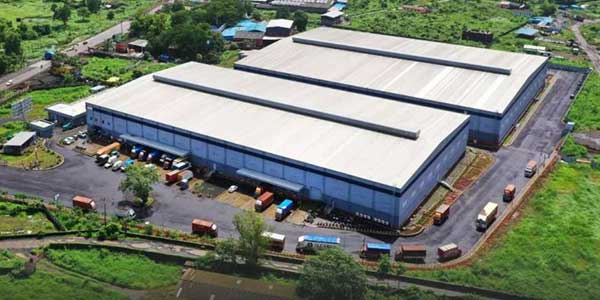
| India’s key logistics markets recorded stronger rental growth than the broader Asia Pacific region, supported by manufacturing activity, domestic consumption and supply-chain diversification, reported IBEF. Data from Knight Frank showed prime logistics rents in Mumbai, Delhi-NCR and Bengaluru increased 5.3%, 5.2% and 4.4%, respectively, year-on-year in the first half of the year, compared with 1.2% half-year-on-half-year growth across the Asia Pacific market. Mumbai posted the highest growth among the three Indian markets, with prime logistics rents reaching Rs. 26 per sq ft per month (US$ 0.27 per sq ft per month). Rents increased 4.4% over the six months to June, while the vacancy rate declined to 13.5%. In Delhi-NCR, prime rents stood at Rs. 22.30 per sq ft per month (US$ 0.23 per sq ft per month), representing a 2.8% increase over the six-month period and 5.2% annual growth. Vacancy fell to 14.7%. The report highlighted India's relative resilience against a more moderate APAC market, where 15 of the 18 cities tracked by Knight Frank recorded stable or rising rents. Higher availability constrained rental growth in some East Asian markets. Mr. Shishir Baijal and Mr. Anshuman Singh linked the Indian market's performance to manufacturing, consumption, supply-chain diversification and growing demand for professionally managed industrial and warehousing assets. |
| Tamil Nadu CM Announces Semiconductor and Logistics Hubs |
|
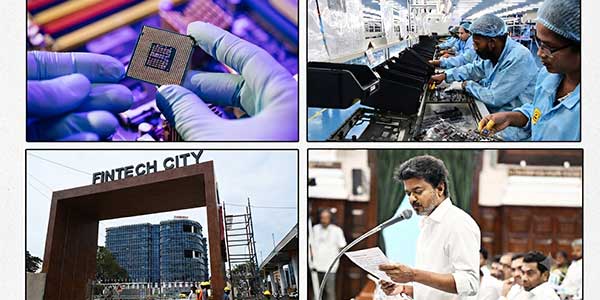
| Tamil Nadu Chief Minister Shri C. Joseph Vijay announced plans for a Semiconductor and Electronics Manufacturing Park in Kancheepuram, alongside a FinTech Hub in Coimbatore and a Multi-Modal Logistics Hub in Tiruchi, reported The Hindu. The semiconductor park will be developed at Maduramangalam in Kancheepuram district by the State Industries Promotion Corporation of Tamil Nadu (SIPCOT) at a cost of ₹175 crore. Shri Vijay made the announcements in the Assembly, stating that the semiconductor facility was intended to attract investment and strengthen Tamil Nadu’s role in the sector. The park will include a global-standard R&D as support for the new semiconductor manufacturing units. It is expected to attract ₹2,000 crore in investments and generate direct and indirect employment for 5,000 people. The Coimbatore FinTech Hub will be developed under a public-private partnership model through the Tamil Nadu Industrial Development Corporation (TIDCO), with an investment of ₹400 crore. It will include office spaces, laboratories and training facilities aimed at supporting digital financial services and attracting global investment. The government will also establish a Multi-Modal Logistics Hub in the Tiruchi region based on a TIDCO project report. The facility is intended to support investment in a region with major industries and a large base of small and medium-sized enterprises. |
| Tata, Javelin Venture Plan India Co-Production |

|
| Tata Advanced Systems Limited (TASL) and the Javelin Joint Venture (JJV), a partnership between Raytheon and Lockheed Martin, have signed a memorandum of understanding to explore co-production of the Javelin All Up Round (AUR) in India and strengthen its global supply chain, reported Eurasia Review. TASL was selected as JJV’s prime Indian partner following an evaluation of companies based on their capabilities and expertise. Under the agreement, the companies will examine establishing a final assembly and integration facility for Javelin AURs in India, along with local component production. The arrangement would bring additional assembly expertise and manufacturing capabilities into India’s defence industrial base while creating high-tech employment and supporting greater domestic self-reliance. The planned production model would combine Indian final assembly with components manufactured in the United States. Sub-assembly kits produced at Lockheed Martin’s facility in Troy, Alabama, and guidance electronics units made at Raytheon’s facility in Tucson, Arizona, would be shipped to India for final assembly and integration. The companies said the arrangement would also strengthen global supply-chain resilience amid rising demand for Javelin systems and support security and readiness across the Indo-Pacific. Larger production volumes could further enable economic order quantities and improve affordability. |
| Semicon 2.0 Broadens India’s Chip Supply Chain |

|
| The government has notified the Rs 1,27,500-crore Semicon 2.0 scheme, shifting support beyond chip fabrication to a broader domestic semiconductor supply chain, reported The Print. The programme reduces capital subsidies for fabrication plants while introducing fiscal support for semiconductor equipment, chemicals, gases and raw materials. Silicon fabrication plants will receive subsidies covering 40% of eligible capital expenditure, while compound-semiconductor fabs, display fabs and other specialised facilities will receive 35%. Both rates are below the flat 50% subsidy provided under the Rs 76,000-crore Semicon 1.0 programme notified in December 2021. Semicon 2.0 divides eligible activities into six pillars covering design, equipment and materials, fabs, ATMP and OSAT packaging, research and talent. The design component includes stricter ownership requirements for strategically important chips. Intellectual property developed under the strategic category will be jointly owned by the applicant and the Centre for Development of Advanced Computing (C-DAC), while design and development files will have to remain in India, stated The Print article. The government will determine strategic chip categories through an expert panel chaired jointly by the Principal Scientific Adviser and National Security Adviser. The categories will cover compute, memory, radio frequency, power, networking and sensors. Semicon 1.0 had approved 12 projects across six states, involving investment commitments exceeding Rs 1.64 lakh crore. Three back-end facilities in Sanand, Gujarat, have begun commercial production this year, the report said. |
INTERNATIONAL

|
| Apple has signed a multi-year agreement worth more than US$30 billion with Broadcom to manufacture custom silicon components and advanced wireless technologies in the United States, strengthening domestic semiconductor supply chains and expanding local chip production. The agreement forms the largest commitment under Apple’s American Manufacturing Program and is expected to result in the production of more than 15 billion US-made chips, reported Quasa Media. The deal includes a US$1.5 billion expansion of Broadcom’s facility in Fort Collins, Colorado, where advanced radio frequency components, including FBAR filters, will be produced. The project is expected to create hundreds of manufacturing and engineering jobs while supporting Apple’s efforts to establish an end-to-end silicon supply chain within the US.The report noted that Apple launched its American Manufacturing Program in 2025 as part of a broader US$600 billion domestic investment plan. Since then, the company has sourced more than 20 billion US-made chips from 24 factories across 12 states and plans to add 20,000 research, engineering and AI-related jobs in the country. |

|
| Qatar and Saudi Arabia have held virtual talks to strengthen bilateral cooperation in trade and logistics, Qatar News Agency reported. Senior officials from both countries discussed measures to improve trade flows, streamline customs procedures and enhance logistics efficiency as part of efforts to deepen economic ties. The meeting was co-chaired by HE Minister of State for Foreign Trade Affairs, Dr Ahmed bin Mohammed Al Sayed and HE Vice Minister of Transport and Logistics Services of the Kingdom of Saudi Arabia Dr Rumaih Al Rumaih. Senior officials from both sides took part in the discussions. Qatar was represented by HE Chairman of the General Authority of Customs Ahmed Al Jamal and HE Undersecretary of the Ministry of Transport Mohammed bin Abdullah Al Maadeed. The Saudi delegation included HE Governor of the General Authority for Foreign Trade Mohammed Al Abduljabbar and HE Deputy Minister for Logistics Services Musa Al Barqi.Discussions focused on facilitating the movement of goods, simplifying customs processes, improving logistics services and increasing bilateral trade volumes between the two countries. The two sides said the proposed measures would build on the close relationship between Qatar and Saudi Arabia while advancing their shared economic objectives through stronger trade and logistics cooperation. |
|
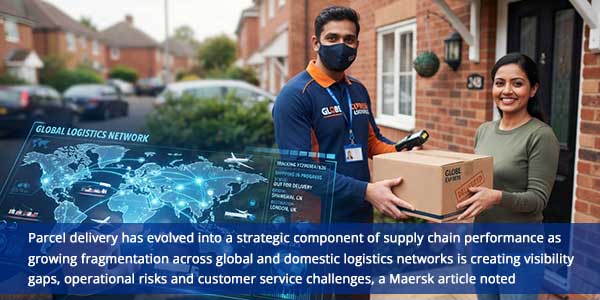
| Parcel delivery has evolved into a strategic component of supply chain performance as growing fragmentation across global and domestic logistics networks is creating visibility gaps, operational risks and customer service challenges, a Maersk article noted. It argued that shippers can only build real resilience into last-mile delivery by orchestrating several carriers in tandem, with clear ownership at each handoff and active flagging of problems rather than passive tracking. The article explained that while global supply chains are typically planned and managed through structured international freight networks, the final stage of delivery often shifts to fragmented domestic parcel providers. This separation can reduce visibility, weaken accountability and increase the risk of delivery failures at the point where customer experience is most affected.It further noted that the growth of e-commerce has transformed parcel delivery from a linear process into a complex network involving multiple fulfilment centres, decentralised inventory, regional carrier specialisation and rising customer expectations. Delayed handoffs, missed shipment updates and fragmented data can lead to customer complaints, refunds, higher operating costs and reduced brand trust. |
|
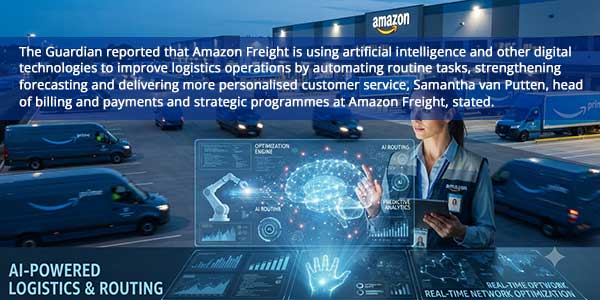
| The Guardian reported that Amazon Freight is using artificial intelligence and other digital technologies to improve logistics operations by automating routine tasks, strengthening forecasting and delivering more personalised customer service, Samantha van Putten, head of billing and payments and strategic programmes at Amazon Freight, stated. She added advances in generative AI are expanding opportunities to improve operational efficiency while enabling employees to focus on higher-value activities. Ms. van Putten explained that AI is helping automate administrative processes, allowing customer-facing teams to spend more time supporting shippers. The technology is also being used to analyse operational data and generate personalised recommendations, while AI-powered assistants are expected to simplify the booking process by answering customer queries and routing complex issues to appropriate teams.She also highlighted the use of machine learning in intelligent pricing and demand forecasting. By analysing factors such as market conditions and capacity availability, AI enables Amazon Freight to optimise pricing and position trucks, drivers and other resources more effectively, particularly during peak demand periods. |
|
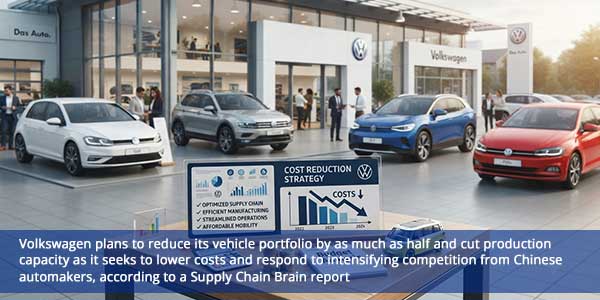
| Volkswagen plans to reduce its vehicle portfolio by as much as half and cut production capacity as it seeks to lower costs and respond to intensifying competition from Chinese automakers, according to a Supply Chain Brain report. The restructuring reflects the company's efforts to adapt to the global transition towards electric vehicles and changing market dynamics. The report said Volkswagen also intends to reduce model variants by up to 75%, significantly limiting customer customisation options, while lowering annual production capacity from 12 million vehicles before the COVID-19 pandemic to about nine million. Media reports cited in the article indicated the company could eliminate up to 100,000 jobs by 2030 and close several manufacturing plants, although Volkswagen has not confirmed those measures.Following a board meeting, Chief Executive Officer Mr. Oliver Blume said the company needed to eliminate excess capacity, citing a more challenging geopolitical environment and growing competitive pressures. He said the coming years would determine which companies remain leaders in the global automotive industry. |
|
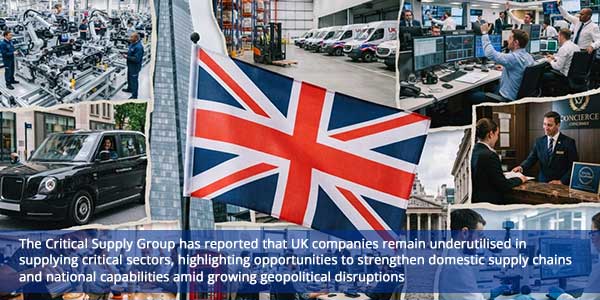
| The Critical Supply Group has reported that UK companies remain underutilised in supplying critical sectors, highlighting opportunities to strengthen domestic supply chains and national capabilities amid growing geopolitical disruptions. The report, based on a survey of nearly 200 businesses, identified procurement complexity and limited visibility of opportunities as the biggest barriers preventing companies from expanding their role in critical industries. The findings showed that over seven in 10 companies already supplying one critical sector believe they could serve one additional sector, with defence, civil nuclear and space cited most frequently. Energy emerged as the largest shared infrastructure dependency, followed by transport and communications, while most businesses reported strengthening resilience through supplier diversification, contingency planning and strategic partnerships.The report also highlighted significant challenges for small and medium-sized enterprises, which reported lower visibility of procurement opportunities, weaker engagement with buyers and limited access to resilience information. Only one-third of surveyed businesses had documented their critical input dependencies. |
| AI Supply Chain Data Mistakes Raise Risks |

|
| Poor-quality supply chain data is creating operational, financial and compliance risks for businesses as logistics networks become increasingly digital and AI-enabled, reported Inbound Logistics. The publication highlighted the experience of GE Appliances, which cut aftermarket parts backorders by more than 25% after deploying an AI-powered supplier collaboration agent in 2025. The agent handles routine supplier follow-ups on its own, confirms where orders stand, and flags problems that need a person to step in. The report highlighted that inaccurate, incomplete or delayed information can contribute to inventory shortages, shipment delays, compliance failures and inefficient use of working capital. In a 2025 IBM survey, over a quarter of respondents pegged the yearly cost of weak data quality at upwards of $5 million each. Common problems included manual data entry, fragmented information across systems, inadequate product and supplier visibility, and data that did not accurately represent operational conditions. Errors in dimensions, weights, routing details or inventory records can affect freight costs, warehouse capacity and fulfilment decisions, while getting country-of-origin or hazardous-material classifications wrong can hold consignments up at customs, invite penalties, or stop a shipment altogether. |
| AI Reshapes Supply Chain Operating Models |

|
| Artificial intelligence is poised to reshape supply chain management by changing how organisations structure decision-making, workflows and the division of responsibilities between people and machines, reported Logistics Viewpoints. The shift is moving beyond individual AI capabilities toward operating models in which intelligence is continuously available, software can coordinate across applications and machines receive defined decision-making authority. The report highlighted that lower costs of AI-enabled analysis could allow companies to examine far more operational events continuously than was previously practical. However, the value of this capability would depend on shared objectives, connected data and the ability to translate insights into execution. Cross-functional workflows are expected to become a central focus, with companies redesigning processes across ERP, WMS, TMS, procurement, planning and visibility systems rather than modernising applications in isolation. Reducing decision-to-action latency could improve the utilisation of inventory, transportation, warehouse capacity, labour and manufacturing assets. The emerging model would also allocate autonomy selectively. Routine and reversible decisions could increasingly be handled by machines, while ambiguous or high-consequence choices would remain subject to greater human oversight. |
| AI Delivers Value Across Logistics Operations |
|
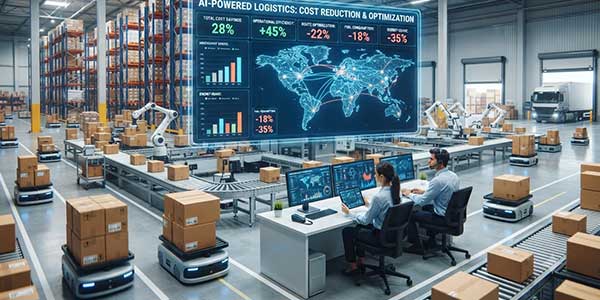
| Artificial intelligence is delivering measurable operational gains in logistics, particularly in structured environments where processes are repeatable and results can be quantified, reported Inbound Logistics. An article by Mr. Nicolai von Bismarck, Partner at McKinsey & Company, identified demand forecasting, freight matching, warehouse slotting and shipment visibility as areas where AI is producing significant value. McKinsey research cited in the article estimated that AI applications in distribution operations could reduce inventory by 20% to 30%, logistics costs by 5% to 20% and procurement spending by 5% to 15%. One last-mile operator managing more than 10,000 vehicles reportedly generated $30 million to $35 million in savings through AI-powered virtual dispatcher agents, representing a 15x return on a $2-million investment. The article highlighted that AI remained less effective for activities requiring contextual judgement, including handling damaged or misdirected freight, complex customs brokerage and supplier negotiations. Ambiguous situations and unfamiliar scenarios can limit AI performance, while frontline resistance can also constrain adoption. In a separate deployment cited in the same article, AI use improved inventory accuracy to 99% or higher, cut dock-to-stock times from 24–48 hours to 2–6 hours and reduced receiving labour by 30%–50%. Mis-shipments fell by as much as 90%, while lost, damaged and delayed packages declined by 60%. |
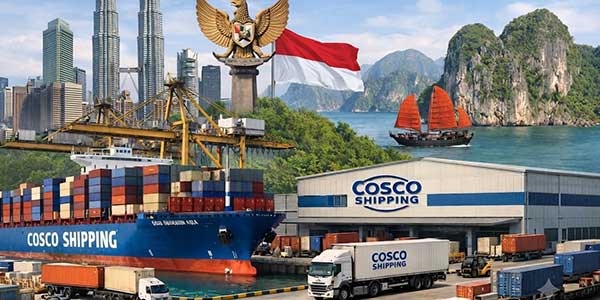
| Cosco Expands Integrated Logistics Across Southeast Asia |
|
| Cosco Shipping International (Singapore) is expanding its integrated logistics operations across Southeast Asia as it positions itself as an end-to-end supply chain provider, reported The Edge Malaysia. The company entered the logistics sector in 2018 through the acquisition of Cogent Holdings and has since built operations spanning warehousing, container depots, automotive logistics and transport management. The company has also expanded its logistics infrastructure in Singapore. Its Jurong Island Logistics Hub, covering about 61,000 sq m, handles up to 100,000 twenty-foot containers annually and has maintained warehouse occupancy above 90% since opening in April 2021. A second phase, expected around end-2026 or early 2027, will add 63,000 sq m and double the facility’s capacity. Cosco Shipping has also strengthened its presence in Malaysia, acquiring five logistics companies between 2020 and 2023. The company reported strong revenue and profit growth from its Malaysian operations in the first half of 2026 after a period of restructuring. The company’s longer-term ambition is to become a trusted integrated logistics provider across Southeast Asia, with operations or investments also spanning Indonesia and Vietnam. |
| Western Sydney Airport Drives Region’s Industrial Pipeline |

|
| The newly operational international airport in Western Sydney is spurring a major build-out of industrial property nearby, with roughly A$24 billion of projects proposed around the site, according to the Commonwealth Bank of Australia (CommBank). Those proposals could deliver 5.5 million square metres of new industrial floorspace across 205 separate schemes — enough to lift the Outer Central West region's existing industrial stock by close to 55%. Taking in suburbs such as Badgerys Creek, Kemps Creek, Erskine Park, Eastern Creek, Orchard Hills and Bringelly, the area now holds the biggest industrial pipeline of any of the 17 Australian regions CommBank tracks. Build-out is likely to run 10 to 12 years, and nearly two-thirds of the proposed floorspaceis clustered in just two of those suburbs — Badgerys Creek and Kemps Creek. Distribution and logistics premises make up close to 94% of the proposals, with eight cold-storage sites also in the mix. Because the airport is the only one in Sydney without a night-time curfew, it is well placed to handle time-sensitive freight, including fresh and chilled produce. Cargo flights started in July; scheduled passenger services are due to begin on 25 October 2026. CommBank further estimates that around A$22 billion of transport and supporting infrastructure has already been built or is under way to serve the airport. Over the same horizon, Western Sydney's population is projected to expand by roughly 653,000— about 26% by 2041, lifting the region's share of Greater Sydney's residents from around 44% to 47%. |
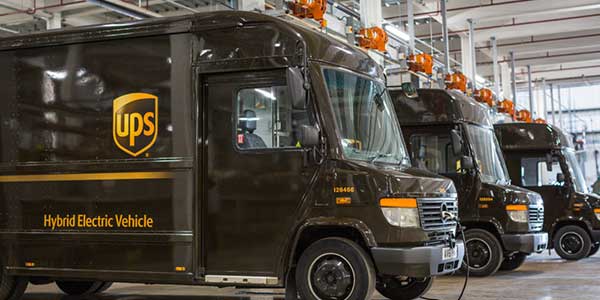
| UPS Retains Top Logistics Brand Ranking |
|
| UPS remained the world’s most valuable logistics brand for the 12th consecutive year despite an 8% decline in brand value to USD30 billion in 2026, reported Fleet Publications, citing Brand Finance’s Logistics 50 2026 report. The global logistics sector’s combined brand value reached USD216.8 billion as the industry recovered amid continuing financial and geopolitical pressures. The US accounted for 42% of the total at USD90.8 billion, followed by China at 14% and Germany at 9%. FedEx retained second place, with its brand value increasing 10% to USD25.1 billion, supported by cost-reduction measures and expanded revenue channels. JR ranked third with a brand value of USD13.1 billion, helped by higher revenue across its JR East, JR West and JR Central operations. Other leading brands included DHL in fourth place, Union Pacific fifth, SF Express sixth, USPS seventh, Maersk eighth, BNSF ninth and China Post 10th. CEVA was the fastest-growing logistics brand, with its value rising 129% to USD2.1 billion. The increase followed its acquisition of BorusanLojistik and new and renewed contracts in the UK. |
CII Institute of Logistics (CII-IL) expresses heartfelt thanks to all the MOVE members for sharing their expertise and contribution to enrich further the collective knowledge and experience of the MOVE network. This section provides an opportunity for MOVE members to share messages with the forum. Sarjak Container Lines (SCL) Sarjak Container Lines (SCL) is a leading Indian MNC and premium logistics solutions provider, with a strong Project Logistics DNA and expanding capabilities across EXIM, freight forwarding, and supply chain solutions. With a growing pan-India presence, global network, experienced people and technology-led capabilities, SCL is expanding its role in India's evolving trade and industrial ecosystem.
We will connect again next month, with a comprehensive dossier of news, trends and events from the industry.