
SUPPLY CHAIN TECHNOLOGY SUMMIT 2026
From Automation to Autonomy – AI, Physical Intelligence & the Next-Generation Supply Chain
14th October 2026, WednesdayBengaluru | 1000Hrs - 1700Hrs
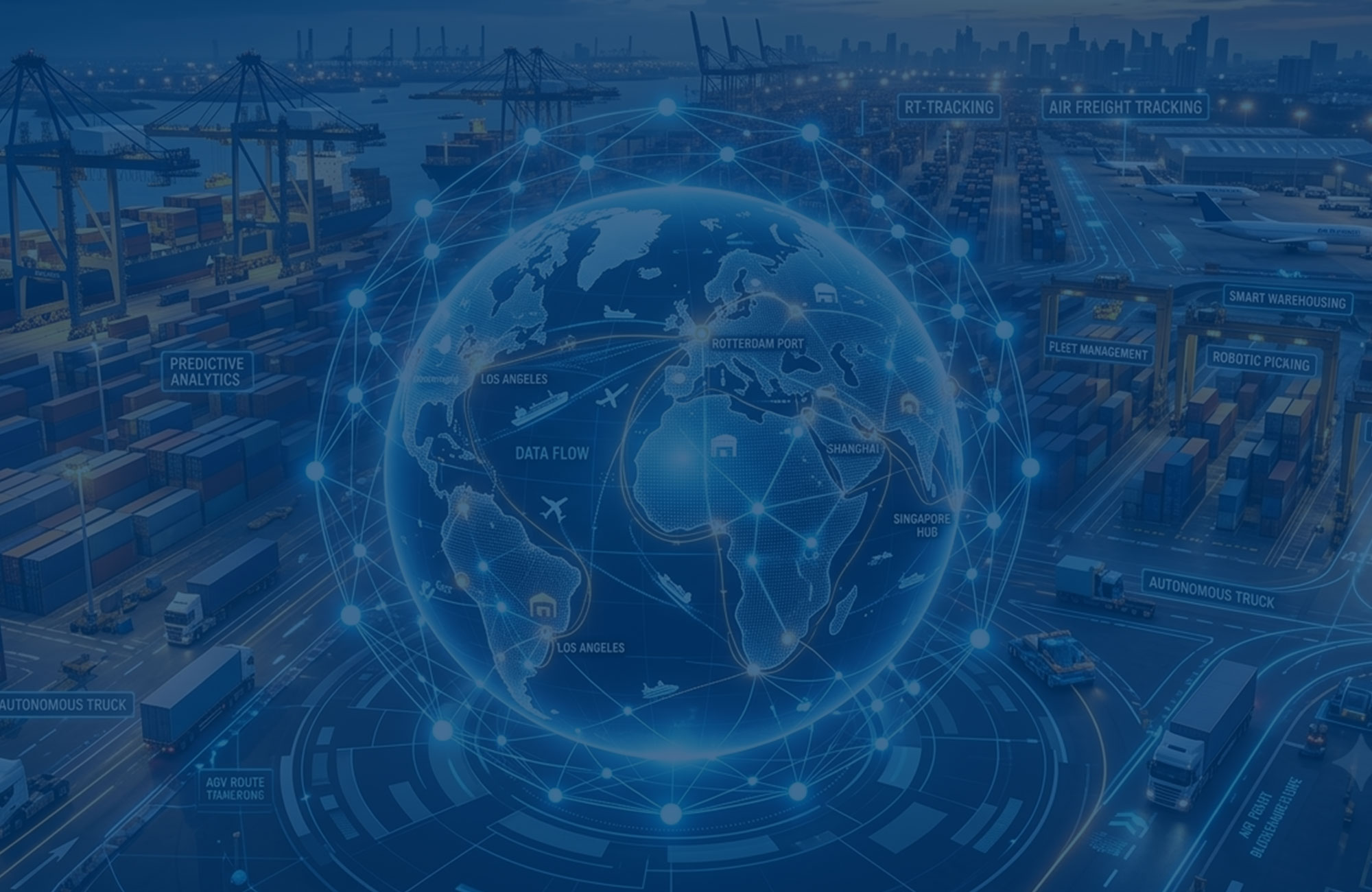
India is entering a new phase of supply chain digitisation. The first wave established foundational platforms—ERP, WMS, TMS, IoT, cloud, analytics and control towers. The next wave is increasingly about intelligence in action: systems that can sense changes in demand and supply, reason through trade-offs, coordinate across functions and partners, and trigger or execute decisions within defined guardrails. This shift is being accelerated by the convergence of agentic AI, advanced analytics, edge computing, computer vision, digital twins and increasingly capable robotics. In parallel, Physical AI is beginning to change the nature of automation. Instead of rigid, single-task machinery designed for stable environments, supply chains can increasingly deploy adaptive machines that perceive their surroundings, learn from data, collaborate with people and other machines, and respond to changing conditions in real time. The opportunity is particularly relevant for India. The National Logistics Policy and digital platforms such as ULIP are building the connective tissue for more integrated logistics, while manufacturers, retailers, e-commerce players and logistics providers are investing in automation, visibility and data-led decision making. Globally, the signal is equally clear. AI and robotics are moving from isolated use cases toward integrated operating models. Control towers are evolving from dashboards into decision and orchestration layers. AI is moving from prediction and recommendation toward guided execution. Robotics is moving from fixed automation toward flexible, sensor-rich and increasingly adaptive systems. The Supply Chain Technology Summit 2026 will bring together industry leaders, logistics operators, technology innovators and policymakers to explore what it takes to move from digital supply chains to intelligent and increasingly autonomous supply chains. The agenda will focus not on technology for its own sake, but on the operating models, data foundations, governance and business cases required to convert emerging technology into measurable improvements in service, cost, resilience, productivity and sustainability. The agenda will focus not on technology for its own sake, but on the operating models, data foundations, governance and business cases required to convert emerging technology into measurable improvements in service, cost, resilience, productivity and sustainability.
Report on
Agentic AI layerd on APS transformations
Supply chain planning organizations have spent the last decade investing in APS platforms such as Blue Yonder, o9, Kinaxis, SAP IBP, and Oracle to improve forecasting, inventory positioning, supply planning, and cross-functional alignment. Those systems have materially improved mathematical planning quality, but they still leave large amounts of work to planners: interpreting exceptions, coordinating trade-offs, explaining recommendations, collecting context from fragmented systems, and converting approved plans into downstream execution. This report examines the next layer on top of APS: agentic AI. In this context, agentic AI refers to LLM-based systems and specialized AI agents that can interpret APS outputs, plan multi-step workflows, retrieve enterprise context, coordinate actions across teams and systems, and in bounded cases execute approved decisions. The report is written for enterprise transformation leaders, planning center-of-excellence heads, digital supply chain leaders, and technology decision-makers evaluating how APS transformations should evolve into AI-enabled planning operating models.
DownloadSESSION 1
BUILDING THE AUTONOMOUS SUPPLY CHAIN: FROM AI COPILOTS TO MULTI-AGENT DECISION NETWORKS
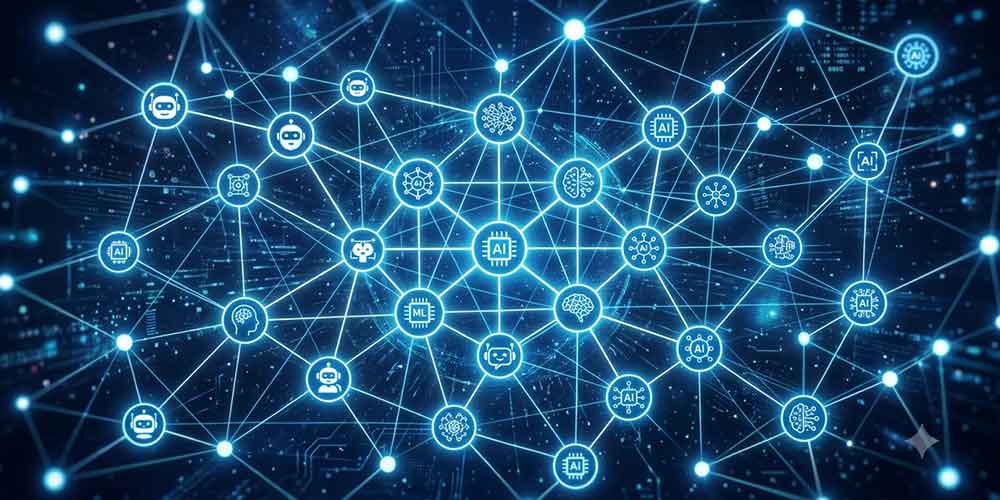
The traditional control tower is rapidly evolving from a visibility layer into an intelligence and action layer. AI agents are increasingly capable of monitoring signals, assessing constraints, simulating alternatives, collaborating across business functions, and initiating actions within defined governance frameworks. The next frontier is multi-agent orchestration, where planning, procurement, sourcing, inventory, manufacturing, logistics, and customer-service agents work together to optimize outcomes across the value chain. As organizations move beyond experimentation and isolated AI use cases, the focus is shifting toward enterprise-scale deployment, governance, trust, and measurable value creation.
- Agentic AI in supply chain planning and execution
- Multi-agent systems across procurement, sourcing, planning, manufacturing, warehousing, and transportation
- Control Towers 2.0 and closed-loop decision-making
- AI-enabled procurement and supplier collaboration ecosystems
- Supplier risk intelligence and predictive sourcing
- AI governance, security, auditability, and responsible AI
- Building AI-ready data foundations through APIs, master data, knowledge graphs, and semantic architectures
SESSION 2
PHYSICAL AI & ADAPTIVE AUTOMATION: THE WAREHOUSE BECOMES A LEARNING SYSTEM
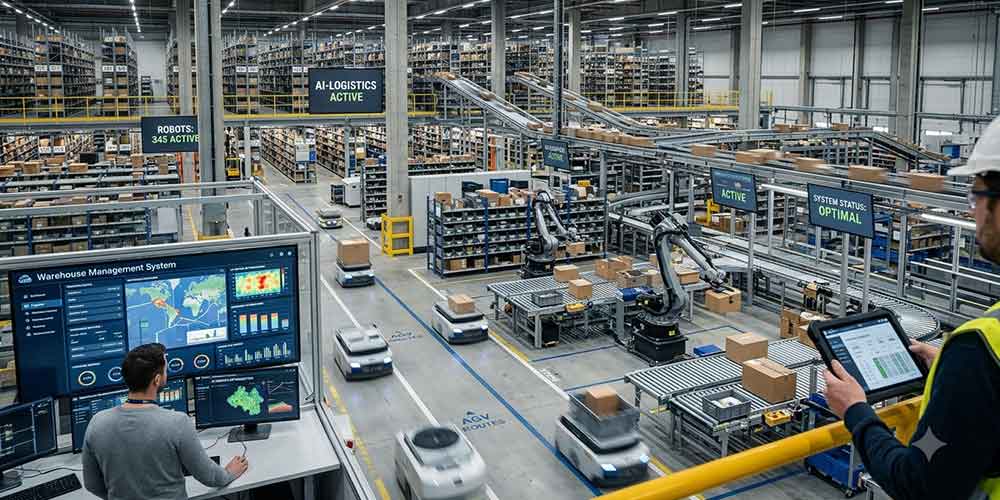
Warehousing and fulfilment operations are entering a new era where physical assets increasingly possess the ability to perceive, learn, adapt, and collaborate. Traditional automation designed around predictable workflows is giving way to intelligent systems capable of operating effectively in dynamic environments. Physical AI combines sensing technologies, computer vision, machine learning, robotics, spatial intelligence, and edge computing to create adaptive ecosystems where people, machines, and software work together seamlessly. From robotics and autonomous material handling to real-time optimization and digital simulations, organizations are exploring new opportunities to improve productivity, flexibility, safety, and operational performance.
- Physical AI applications in warehouses and fulfillment centers
- Adaptive robotics, AMRs, drones, and autonomous material handling systems
- Flexible automation ecosystems and brownfield integrationCommentHighlight
- Digital twins for warehouse design and operations optimization
- Workforce transformation, human-machine collaboration, and future skills
- ROI frameworks and scaling intelligent automation
SESSION 3
INTELLIGENT LOGISTICS NETWORKS: CONNECTING ASSETS, DATA & DECISIONS IN REAL TIME
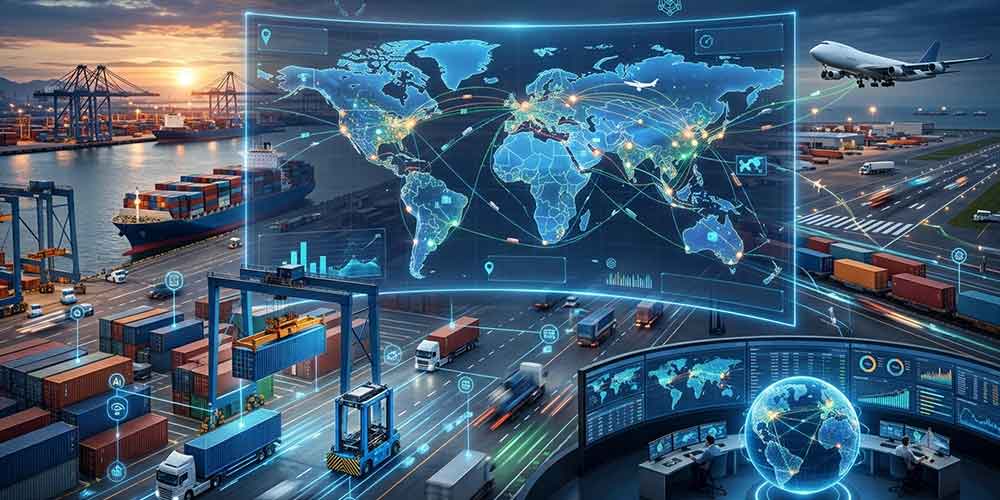
The future of logistics lies in creating connected, intelligent networks that seamlessly link the physical movement of goods with the digital flow of information and decision-making. As supply chains become more complex and distributed, organizations require greater visibility, agility, and responsiveness across transportation, distribution, and partner ecosystems. Advances in IoT, telematics, computer vision, AI, digital twins, and intelligent transportation platforms are enabling real-time visibility and dynamic optimization across logistics networks. These capabilities can help organizations improve asset utilization, reduce costs, enhance customer service, increase resilience, and advance sustainability objectives.
- Dynamic routing, dispatch optimization, and ETA management
- IoT, telematics, and computer vision for logistics visibility
- Network digital twins and scenario planning
- ULIP-enabled interoperable logistics ecosystems
- AI-powered resilience, risk monitoring, and disruption management
- Cyber-physical security across connected logistics networks
Sponsors
Title Partner

Platinum Supporter

Gold Supporter

Gold Supporter

Gold Supporter

Silver Supporter

Silver Supporter
Corporate Contributor

Speakers
INAUGURAL SESSION

Dr K Ganesh
MemberCII Institute of Logistics Advisory CouncilManaging Partner- ChennaiMcKinsey & Company

Mr. Girish Dhondge
Senior DirectorSAP India

Mr. Deen Dayalan
CIO & Global Head - Digital Operations, Cloud Transformation & Site Leader - IndiaKimbarly Clark

Mr. Ashwani Bhargava
Senior Director, India Supply ChainBoeing
SESSION IBUILDING THE AUTONOMOUS SUPPLY CHAIN: FROM AI COPILOTS TO MULTI-AGENT DECISION NETWORKS

Mr.Pankaj Jadhav
Senior Director-Customer AdvisorySAP India
Mr. Ashwani Bhargava
Senior Director, India Supply ChainBoeing

Ms. Harpreet Mohan Kaurr
Planning Head - Supply ChainEnvision India

Mr. Kamlesh Kumar
Vice President of Supply ChainJumbo tail

Mr. Sriram Ramnarayan
MemberCII Institute of Logistics Advisory CouncilChief Business OfficerFreight Tiger
SESSION II PHYSICAL AI & ADAPTIVE AUTOMATION: REIMAGINING LOGISTICS, WAREHOUSING & ENERGY OPERATIONS

Mr. Vishal Devarajan
Associate PartnerMcKinsey & Company

Mr. Anant Bhat
Supply Chain Product Management ExpertSAP Labs India

Ms. Tannistha Ganguly
Associate Director - Supply Chain Warehouse Management Systems (IT)Kimberly-Clark

Mr Ajith K
Head Digital and Artificial Intelligence (Mfg. & Supply)TVS Motor Company

Mr. Balasubramanian Pichumani Iyer
Head Supply Chain ManagementTitan Company
SESSION IIINTELLIGENT INDUSTRIAL OPERATIONS: CONNECTING SUPPLY CHAIN, MANUFACTURING & CRITICAL ASSETS
Mr. Sriram Ramnarayan
MemberCII Institute of Logistics Advisory CouncilChief Business OfficerFreight Tiger

Mr. Neelanchal Panda
Head - Supply Chain ManagementHimalaya Wellness Company

Mr. Kishan Aswath
Co-founder & CEOMojro
Contact
Register
+91-98791 60202 +91-72003 79132 sreeramkumar.j@cii.in conference.cii@cii.in
Register Online

Sponsor Enquiry
+91-72003 79132 +91-98791 60202 sreeramkumar.j@cii.in smitha.nair@cii.in